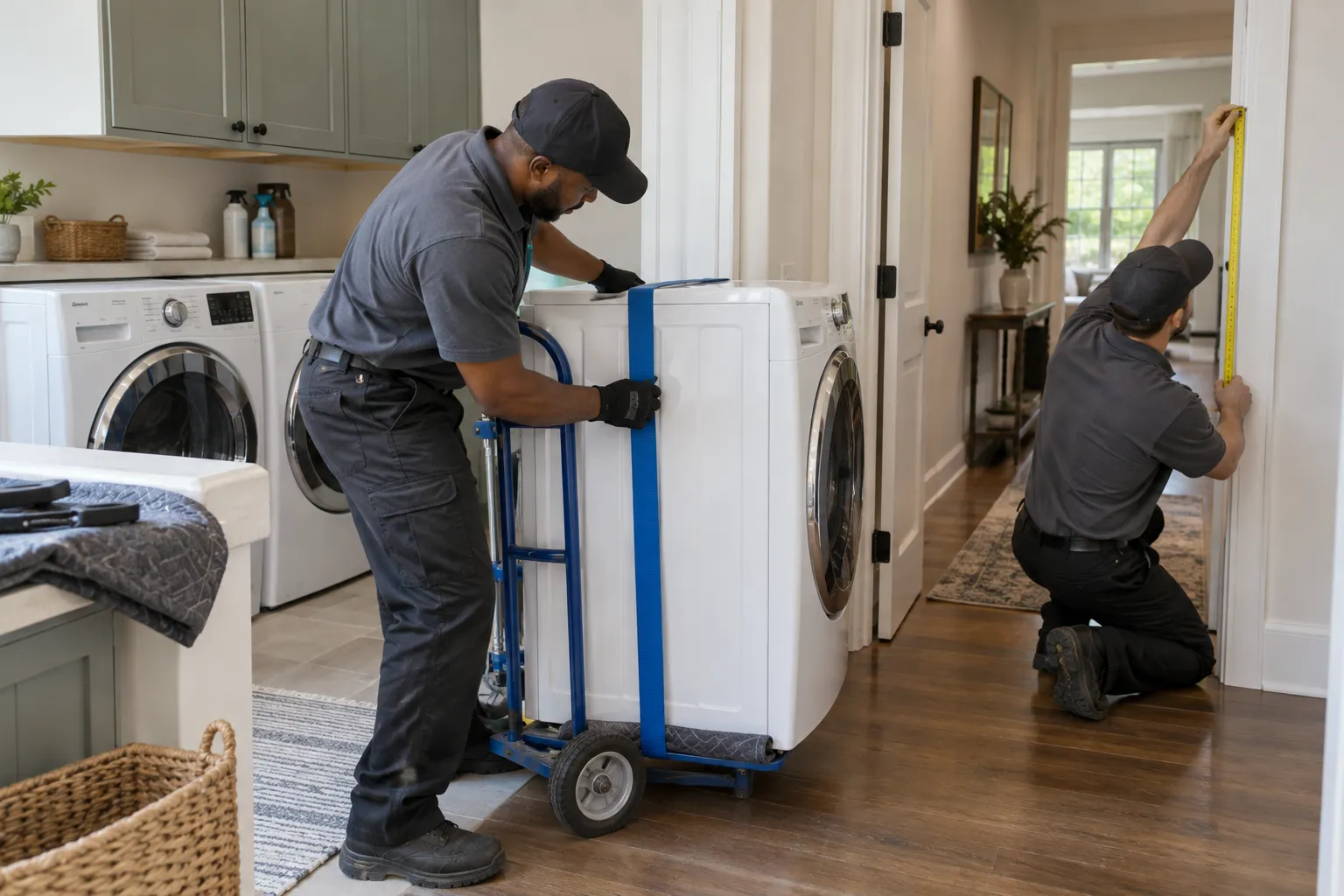
Before appliance pickup, confirm that the unit is disconnected, empty, dry, and reachable. A hauling crew should not be expected to perform plumbing, gas, electrical, or refrigerant work unless that service has been explicitly arranged.
Confirm the disconnection
Unplug ordinary electric appliances only when the cord and outlet are safely accessible. Gas lines, hardwired units, water lines, and refrigerant systems need qualified handling. Ask your installer, plumber, electrician, or appliance technician what applies to the unit.
Empty and dry the appliance
Remove food, racks, detergent, lint, and loose accessories. Defrost freezers early enough for all water to drain, then wipe the interior dry. Secure doors only in a way the hauler approves; tape can damage some finishes.
| Appliance | Useful preparation |
|---|---|
| Refrigerator or freezer | Empty, defrost, drain, and disclose refrigerant concerns. |
| Washer | Disconnect water through qualified help, drain hoses, and secure loose parts. |
| Dryer | Clear lint and confirm whether it is electric or gas. |
| Range | Confirm gas or hardwired disconnection before pickup. |
Clear the route
Measure doors and turns, protect pets, and remove floor clutter. Tell the hauler about stairs, narrow halls, soft ground, or a long carry from the appliance to the truck.
Ask what is accepted
Acceptance and disposal rules can vary by appliance and condition. Describe the make, approximate size, location, and whether it is already disconnected when you request an estimate. See our appliance removal details for the service scope.